How to Attend a Match at San Siro
Watching AC Milan or Inter play at San Siro is a different trip from touring the stadium. You need a ticket for a fixture that has not been scheduled yet when most people start planning, a seat you cannot fully picture until you sit in it, and a plan for a building of 75,817 seats that behaves differently once it is full. This post walks through how the ticket actually works, where you are likely to end up sitting, and what changes at the stadium once a match is on, including for anyone hoping to pair the visit with a stadium tour.
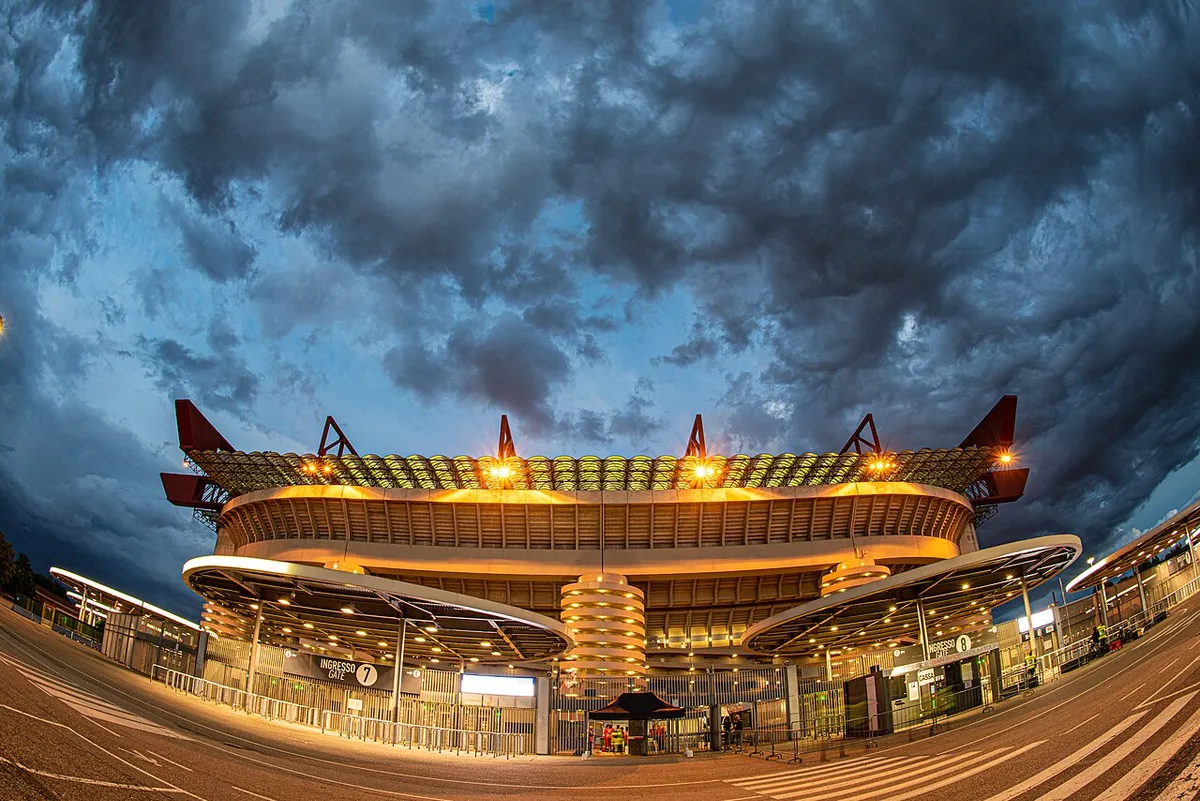
San Siro under lights ahead of kickoff.
Quick answer
You buy a match ticket from the club that is playing at home, AC Milan or Inter, and the ticket carries your name and is checked against ID at the turnstile. Away fans are placed in the top ring behind floor-to-ceiling fencing, and on match days the Museum & Tour can change its opening times at the last minute, so the two are not easy to combine on the same day. A guided listing handles the ticket and the logistics for you if you would rather not deal with either club's own sales system.
Key takeaways
- Tickets are personal: a name goes on the ticket at purchase and is checked with ID at the gate
- A national ID or driving licence has worked at the turnstile, a passport is not required
- One traveller reported paying €28 for a second-tier seat, a single data point rather than a price list
- Getting to the stadium on match day means the same M5 line, just far busier
- Museum and tour times can move without warning on a match day, plan the two separately
- A local-led guided listing runs about 4 hours and rates 4.7 from ten reviews
How Serie A tickets work at San Siro
AC Milan and Inter each sell their own home tickets through their own club channels, because San Siro is one ground shared by two separate clubs rather than one team's home. Whichever club is hosting the fixture is the one whose ticket system you use, and the two systems are not interchangeable.
Every ticket is personal. You give a name at the point of purchase, that name is printed on the ticket, and staff at the turnstile check it against ID. A national ID card or a driving licence has been accepted for this, and a passport is not required, which is worth knowing if you would rather not carry one to a football match.
We cannot tell you when tickets for a specific fixture go on sale or what a specific sector costs, because both clubs set their own on-sale dates and pricing per match and neither publishes a fixed price list. The honest answer is that you check the home club's own site once a fixture is confirmed, rather than relying on a season-old figure from somewhere else.
A question that comes up a lot is whether a membership card or club fan card is required to buy a match ticket. Italian clubs have used loyalty and fan-card schemes in the past, and some fixtures against certain opponents have carried extra requirements. We do not have a verified, current rule for either club on this, so we are not going to state one here. Treat it as something to check on the home club's own ticket page for the specific fixture you want, rather than something we can promise applies or does not apply.
For the full picture of official prices against guided listings side by side, see our own San Siro stadium tours and tickets comparison, which covers the museum route rather than match tickets but explains how the two products differ.
Security at the gates is selective rather than a full search of every bag, so plan to travel light but do not expect a specific bag policy to be enforced the same way at every turnstile. If a specific question about a fixture, a ticket or an accessibility need is not answered on the club's own site, the stadium can be reached directly at [email protected] or +39 02 4879 8299, though that contact is set up for stadium tour and museum enquiries rather than club ticketing, so a match-ticket question is still better directed to whichever club is hosting.
Where you end up sitting
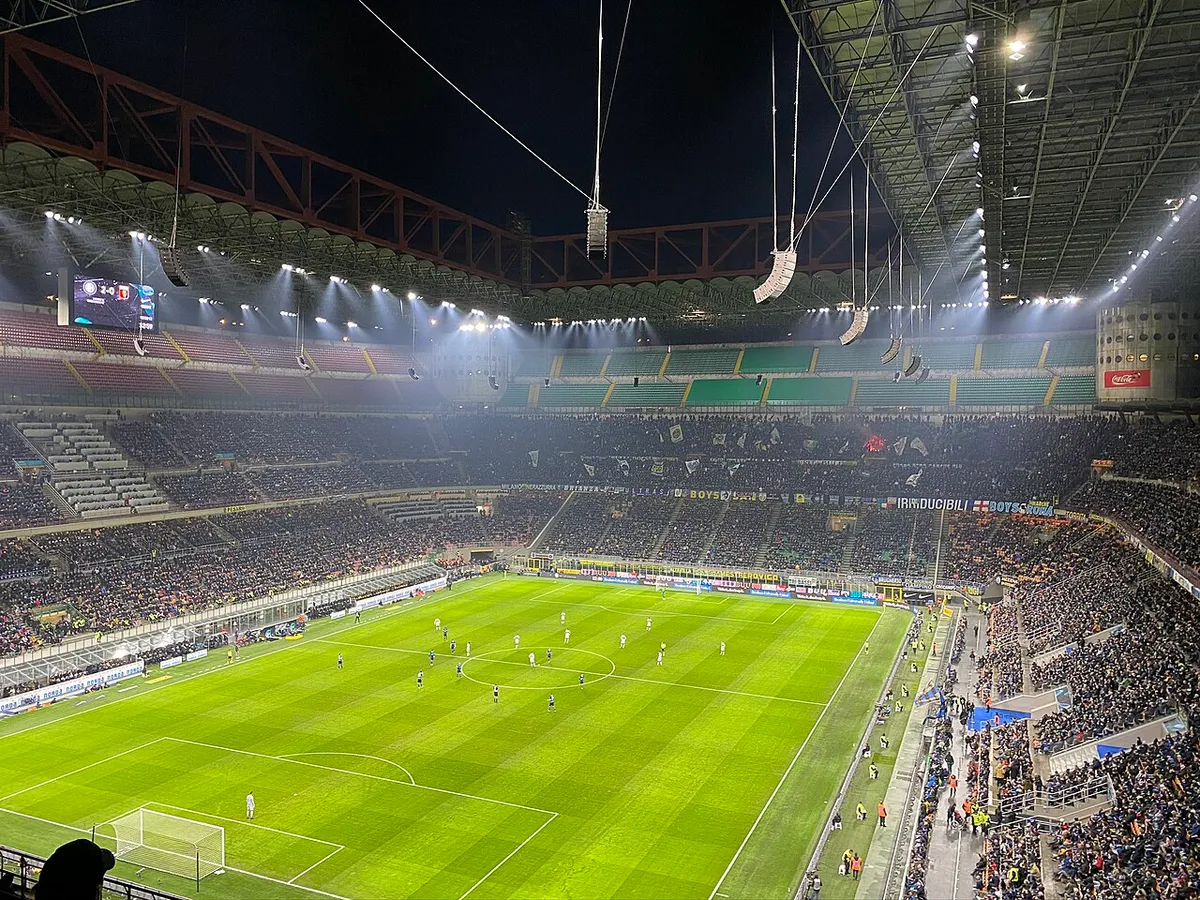
San Siro holds 75,817 seats across three tiers, and where your ticket lands changes what the match feels like more than most first-time visitors expect. The stadium's own rebuild plan, discussed below, does not change any of this for the foreseeable future.
Away supporters are not free to choose a sector near the home ends. They are placed together in the top ring, behind floor-to-ceiling fencing, a layout built for crowd separation rather than the view. If you are travelling to support the visiting side, this is where your ticket will be regardless of price.
One traveller's own account puts a second-tier seat at €28, which we report as a single reported figure and not as a price list. What a seat actually costs depends on the fixture, the opponent and the sector, and neither club publishes a fixed table for us to quote.
The third ring is the part of San Siro most visitors recognise from photographs, held up by the spiral ramp towers added for the 1990 World Cup. It sits highest and steepest, which is why it carries the loudest reputation, but it also means the longest set of ramps to climb before kickoff and the longest walk down afterwards. If mobility is a concern for anyone in your group, factor that climb into your planning rather than assuming any tier is an easy walk.
| Where | What it's like | Best for |
|---|---|---|
| Third tier | Highest, steepest, loudest end sections | Budget seats, full atmosphere |
| Second tier | Mid-height, one reported figure around €28 | Balance of view and price |
| Top ring (away end) | Behind floor-to-ceiling fencing | Away supporters, assigned not chosen |
| Pitch-level hospitality | Closest sightline, sold separately by the clubs | Travellers not watching cost |
What changes at the stadium on a match day
The building itself is the same one you would tour on a quiet Tuesday, but the day runs differently once a fixture is on. Crowds build around the M5 metro exit and the perimeter roads for an hour or more before kickoff, and stewarding shifts from a tour-day pace to a matchday one.
The single most useful fact for anyone trying to combine a visit with a match: Museum & Tour opening times can change at the last minute on match and event days. If you are hoping to see the trophy room and watch a game in the same trip, do not assume both fit into one day without checking the stadium's own opening calendar close to your dates.
This is a genuine planning trap rather than a small print detail. A visitor who books a fixed morning museum slot and an evening match ticket for the same date can find the museum's hours quietly shortened once the fixture is confirmed, because the stadium reasonably prioritises match-day setup over a normal visitor schedule. If your trip only allows one date at San Siro and you want both the museum and the match, check the stadium's opening calendar again in the days before you travel, not just when you first booked.
- Bag checks at the gates are selective, not a full search of every visitor
- Away fans enter and sit separately, in the top ring behind fencing
- Museum and tour hours can shift at short notice on match days
- Crowds on the M5 line and around the stadium build well before kickoff
The table below sets a normal visit day against a match day side by side, built only from the stadium's own published rules rather than any specific fixture.
| Normal visit day | Match day | |
|---|---|---|
| Opening times | Fixed slots every 10 minutes, 09:30 to 17:00 | Can change at the last minute |
| Entrance used | Museum & Tour door beside Gate 6 | Match-ticket holders use their assigned numbered gate |
| How far ahead to plan | Book any day, times are stable | Confirm the tour's hours again close to the date |
The shape of a match day
A rough order of events for a visiting supporter attending a fixture at San Siro, from arrival to full time.
-
2-3 hours before
Travel in on the M5
The metro line to San Siro Stadio gets noticeably busier the closer you get to kickoff, and matchday-only surface transport can be in place around the ground.
-
60-90 minutes before
Arrive and queue
Turnstiles open well ahead of kickoff. Selective bag checks and ID matching against the named ticket happen here, so build in queue time rather than arriving at the last minute.
-
30 minutes before
Find your sector
The three-tier layout and the away end's separate entrance mean it can take longer than expected to reach your actual seat once inside.
-
Kickoff to full time
The match
Away supporters watch from the top ring behind fencing. Home sections fill the lower two tiers and the rest of the third tier.
-
After the final whistle
Leaving the ground
The M5 station and surrounding streets absorb the full crowd at once, so the walk back to the metro takes longer than the walk in.
Booking a matchday experience instead
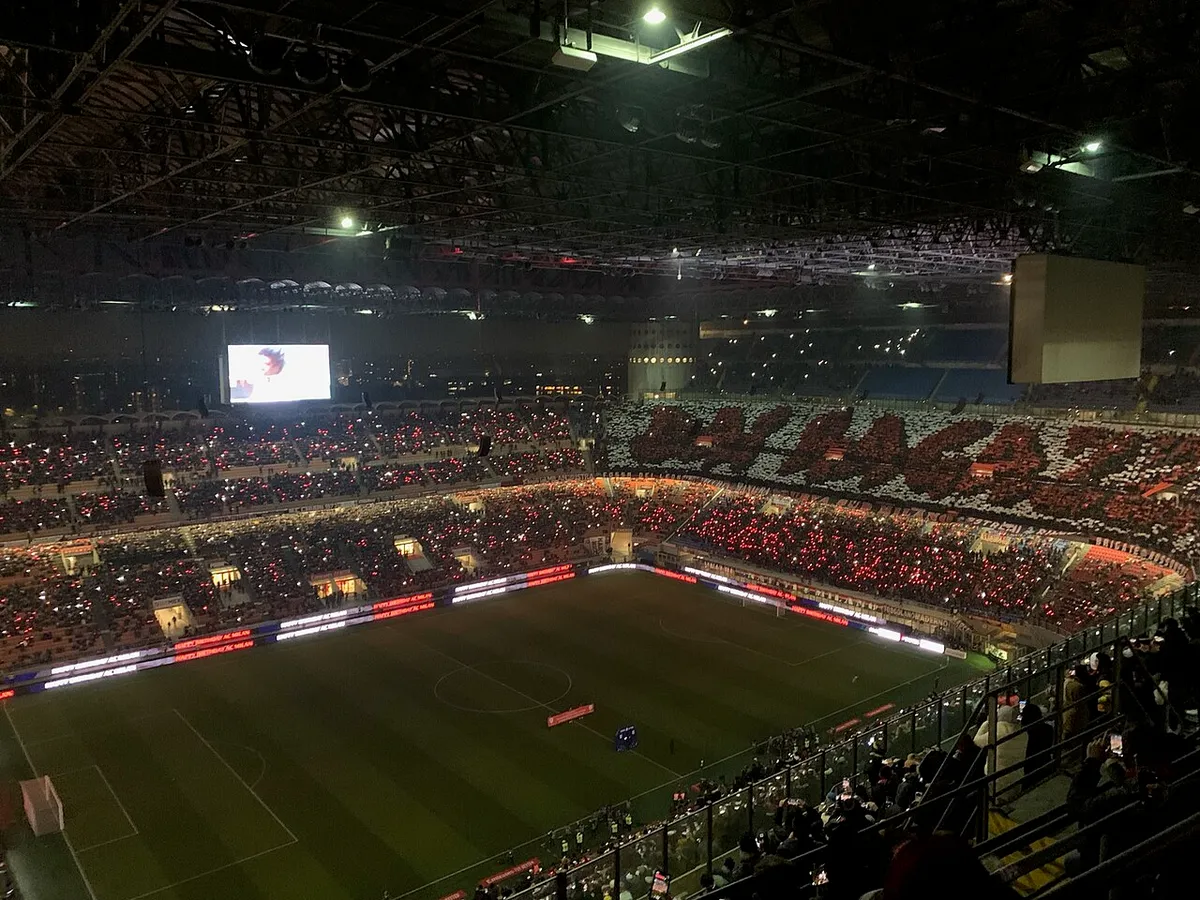
If dealing with two separate club ticketing systems, an unpublished on-sale date and a fixture you cannot yet see on a calendar sounds like more friction than you want on a trip, a matchday San Siro experience is the alternative. This local-led listing runs about 4 hours and rates 4.7 from ten reviews, and it bundles the ticket itself with the kind of local context you would otherwise have to piece together yourself.
This is not the cheaper route to a seat. It is the route that removes the guesswork around on-sale dates, membership requirements and which club's system to use, in exchange for a fixed price you can book before a fixture is even confirmed on the club sites. If you have not decided whether a match or a tour day suits your trip better, is the San Siro tour worth it covers that comparison, and the best time to visit San Siro covers why a non-match day is usually the easier one to plan around.
This approach suits a visitor whose trip dates are already fixed, who does not read Italian well enough to navigate a club's own sales portal, or who simply does not want to gamble a limited Milan itinerary on an on-sale date that might land while they are already travelling. It suits a fan of neither club equally well, since the seat comes without needing to pick a side beforehand.
Match, tour, or both?
If You want to see a live game and do not mind two separate club ticket systems
Buy directly from AC Milan or Inter once the fixture and on-sale date are confirmed
If You want a confirmed seat without navigating either club's own sales portal
Book the guided matchday listing instead
If You only want the museum, the tunnel and the dressing rooms, not a live match
Book the Museum & Tour and skip match logistics entirely
If You want both the museum and a match on the same trip
Check the stadium's opening calendar close to your dates before booking either, since match days can change Museum & Tour hours at the last minute
Before you go
A short list to confirm before matchday.
- Ticket bought from whichever club, AC Milan or Inter, is hosting the fixture
- Name on the ticket matches the ID you plan to bring, a national ID card or driving licence
- Checked whether your date also has a Museum & Tour slot booked, and reconfirmed its hours close to the date
- Planned extra time on the M5 line for the crowd before and after kickoff
- Packed light, since bag checks at the gates are selective but still happen
San Siro Matchday: Frequently Asked Questions
Do I need ID to collect a San Siro match ticket?
Yes. Tickets are personal, a name is taken at purchase and checked against ID at the turnstile. A national ID card or a driving licence has been accepted, a passport is not required.
Where do away fans sit at San Siro?
In the top ring, behind floor-to-ceiling fencing, separate from the home sections. This is assigned, not a matter of ticket price.
Can I visit the San Siro museum on the same day as a match?
You can try, but the Museum & Tour can change its opening times at the last minute on match and event days. Check the stadium's own calendar close to your date rather than assuming both will fit.
Is it hard to get AC Milan tickets?
It depends entirely on the fixture, and we will not pretend to know the availability for yours. What we can tell you is how the process works, because that is what catches visitors out. AC Milan tickets are sold by the club itself, they are personal, and the name you give at purchase is printed on the ticket, so you cannot buy a spare and hand it to a friend at the gate. The club publishes its own on-sale dates for each match and those are the only reliable source. If the sale has already closed or the fixture you want is not on general sale, a guided matchday experience is the route that does not depend on you catching a club on-sale window, and it rates 4.7 from its own reviewers. If you would rather see the ground without a match at all, the stadium runs its museum and tour most days, and picking the right slot matters more than picking the right month.
How much does a San Siro match ticket cost?
Neither club publishes a fixed price list, since pricing is set per fixture. One traveller reported paying €28 for a second-tier seat, which we report as a single figure rather than a price band.
Is there a bag policy at San Siro on match days?
Bag checks at the gates are selective rather than a full search of every visitor. Travelling light avoids any uncertainty at the turnstile.
What is the easiest way to attend a match without dealing with club ticket sites?
A guided matchday listing such as Inter Milan Matchday at San Siro with a Local bundles the ticket with local guidance, at a higher price than a face-value seat but with none of the on-sale-date guesswork.
How do I get to San Siro for a match?
The M5 metro line to San Siro Stadio is the main route, the same one used for getting to San Siro on any other day, just considerably busier before and after kickoff.
Do I need a club membership card to buy a match ticket?
We do not have a verified, current rule on this for either club, so we are not going to state one. Check the home club's own ticket page for the specific fixture, since requirements can vary by opponent.
Can away fans sit anywhere other than the top ring?
No. Away supporters are placed together in the top ring behind floor-to-ceiling fencing, a fixed arrangement rather than a choice you make when buying a ticket.